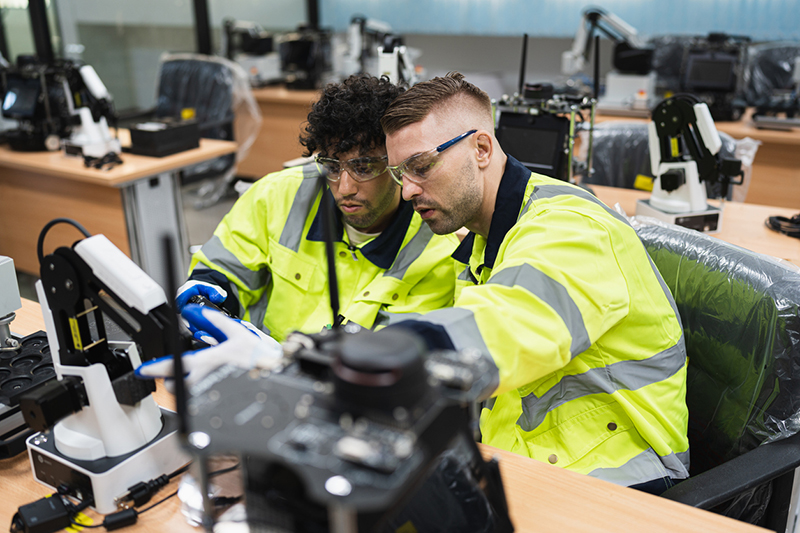
Boosting gender diversity in male-dominated STEM disciplines
How to address gender disparity in STEM, when so many disciplines are overwhelmingly male-dominated? Here’s how to work towards equality
By listening to researchers, staying flexible, embracing criticism and collaborating widely, those developing an institutional publishing ecosystem can reflect the values of the communities they serve
How to help students apply SDG thinking in practical, business-focused ways using local case studies, live briefs, internships and feedback
Using AI can enable admissions teams to receive quick, verifiable results that can improve processing times and free up time for more impactful and student-focused work.
When designed with effective guardrails, AI tools can offer universities an effective way to support admissions teams and meet student recruitment goals
Women must be supported at both the student and staff levels to pursue rewarding careers in STEM, during their degrees as well as in the workforce
Expanding undergraduate research benefits not only the institution, but the students too. Here’s how to embed a research mindset in your undergraduate cohort
Translating research to real-world impact can be daunting for early career researchers. Here, Tiam Lin Sze offers a road map and why early protection of intellectual property is vital, especially before publication
Educators must be bold and adaptive while engaging with AI to show students how to cope with disruptive technologies
Low-cost, practical fixes can build a ‘care aware’ research culture and reduce the mental health strain of combining care and scholarship
GenAI can boost learning on average, according to research – but individual outcomes vary widely. Here’s how to help every student benefit
Practical steps can support racial-minority students, call out bias and make campuses safer at a time when racism in Australian universities is more real than ever, writes Aaron Teo
How universities can take a proactive, compassionate approach to psychological safety that supports all students
Industry collaborations demand thoughtful planning and engagement that extend beyond the bench in order to achieve the real-world impact that universities and researchers hope their discoveries will generate. Here are key considerations
Embedding hands-on experiences into the curriculum can bridge the gap between classroom learning and real-world skills